The Man with the Ax
 I do wake up and get immediately distracted. Sitting down and writing first thing has moved out of my process, out of my routine, and I’m not so sure that is a good thing. This time, the time in the early morning, when it is dark and quiet and I can’t see my coffee mug, has always been critical to my thinking and how I “process” what is happening around me. Then, I entered a state of mind and life where I felt the pull to do nothing but get ideas out of my head and built, and so that is largely how I have spent the last year or more of my life: building. Making. And, finally, beginning to ship things, get them out into the world. Share what I have written, what I have built, with those near and far who may benefit from some of what I have created. Life ebbs and flows, seasons for building, seasons for writing. And that is how I am choosing to look at the past year: it was, and it had to be, and there is nothing wrong with that.
I read an email recently where a developer made it a point to say, “things are moving slowly, and I still refuse to touch AI” and my mind immediately went to building a house the old way.
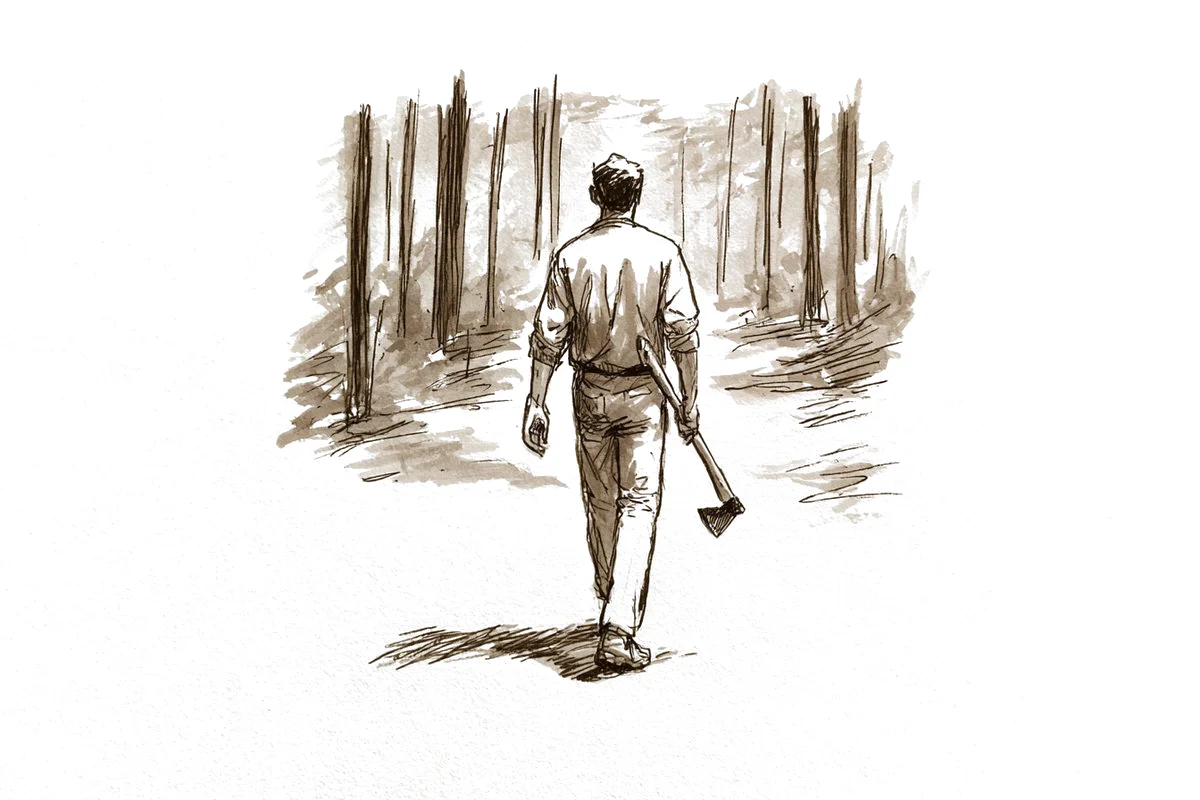
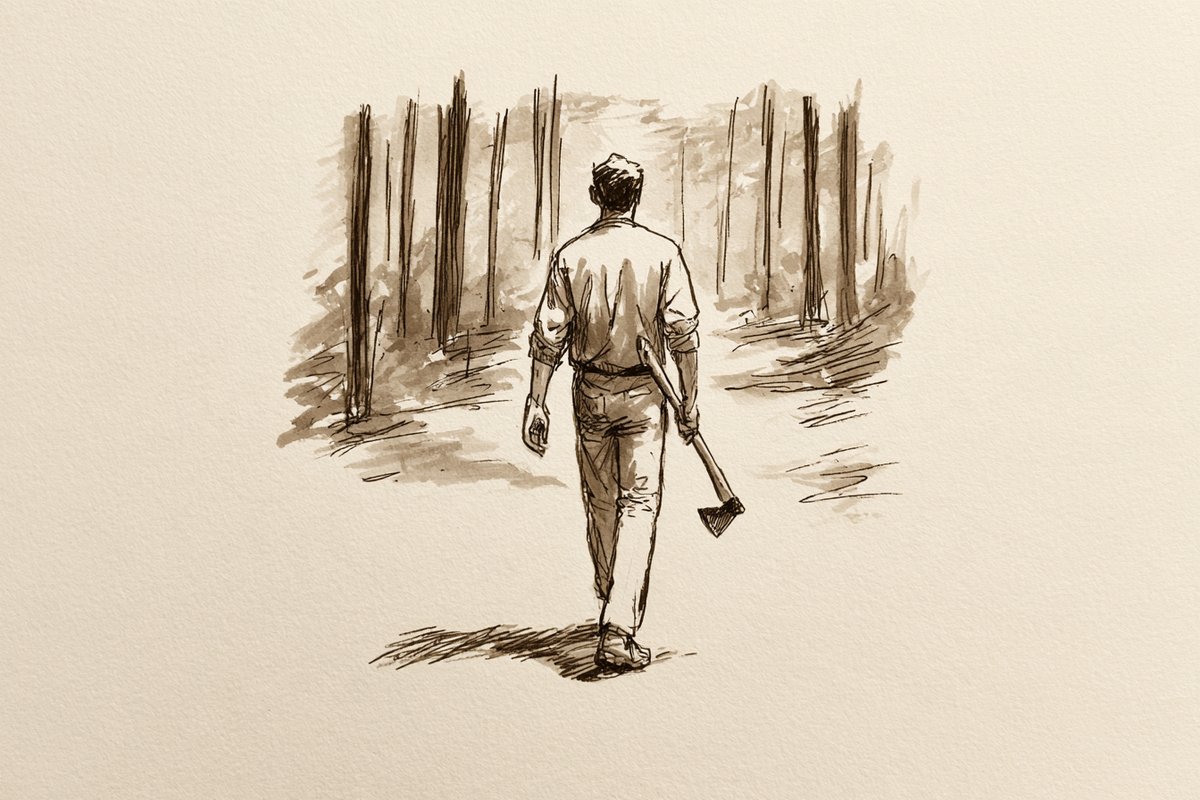
Specifically, early American history, 1700’s or so at the latest and then from there technology began to change, but from then and before building a house was not something that was quick. You did not ride your horse into a neighborhood, stroll past several unoccupied and for sale options, and ultimately choose one to buy and move your family into. Quite the opposite: you, or whoever was hired, would take a horse into the woods, identify appropriate trees for the job, fell them, then use the horse or horses to drag the trees (minus their limbs) out of the woods and to the house site. Once at the house site the ax was the primary tool used for almost all of the building process, an ax and a handful of tools used for measuring.
It was a slow process. In my opinion it was also a highly skilled process. Watching carpenters use the tools and methods from back then to build a house is an absolute thing of beauty. The quiet sound of human-powered metal shaping wood, there is nothing else quite like it. I admire it. I find it to be beautiful. It speaks to a deep part of my soul.
But, the population started to grow at a rate which required technology to speed up the building process. And so, over time, the old way of building was replaced by a newer and faster way. Skills done by hand were replaced by machine. The knowledge of how to do various things with an ax and pair of dividers lost to time and lost to the technology that enabled someone with no skill or knowledge to achieve the same result a hundred times in a day.
I’m not saying this is right but it is the progression of the world. We do not live in the 1700’s, both fortunately and unfortunately. I think there are aspects of living then that are desirable now simply because our pace of life in 2026 feels impossible to sustain. But then I think about their medicine, disease, and how they treated various ailments, and I think I’d rather have the technology of today for those parts of existence.
Either way, whether we agree or not with the ax being replaced by all manner of powered tools, the human condition is to not remain in place. The human condition, something I believe was created within us, is to always improve. Find a better way, a faster way, find a middle ground sometimes, but most times full steam ahead.
The sound of a powered saw slicing through wood is an ear-splitting unnatural sound. It is high-pitched as if the wood is screaming in agony (but it is not). The sound of harvesting wood is equally disturbing.
On the other hand, the sound of a horse walking through the woods, breathing, stepping, hoofing, the sound of a man thinking, calculating, considering, is quiet. It is, one could say, natural. The same goes for when the blade of the ax meets the wood. When done right, the wood gives way, as if to say, “okay, this is what I will become next.”
As beautiful as it sounds, and as inspiring and skillful as the process is, time moves on and will leave that man, his horse, and ax, in the past without a second thought.
Right or wrong, whether we like it or not, things change.
And we have a choice, we always have a choice. Will we adapt to the change or will we choose to do things how they have always been done?
History shows that regardless of what one person thinks is right or wrong, the population as a whole will move in a direction and leave some behind.
A lot of homes built today using these “new” methods are nothing to inspire awe or make one sit and wonder how they achieved various joining techniques. We all know it was made by a group of mostly nameless workers using their chosen brand plugged into the wall. But, the house built is affordable for who needs it, keeps them warm inside when it is cold outside, and dry inside when it is wet outside.
There are also other homes that are exquisite in detail and craftsmanship. These may cause one to stop and admire. But they were still built by a group of mostly nameless workers using their chosen brand plugged into the wall. The person most likely known by name in this scenario is: the architect.
How did they achieve it? What methods were used? Where did they source the materials? Which brand was plugged into the wall?
The architect knows the answers to all of these questions. The person walking by may wonder at some of them, but mostly they are just admiring the beauty of the finished product. How it was made, all of the details and decisions that made it what it is today, don’t really matter to that person. They do matter to the architect, and that is what matters most.
As for the man with the ax and dividers.
Some will set their ax down and learn how to incorporate the new technology into their process. They will bring their innate knowledge from years of doing it by hand and will excel at using that which is new, and they will forge a new path between the two.
Others will choose to stay with what they know, continue as they have been. As the world around them changes they will pick up their ax and use their dividers to do that which they have always done.
To do that which both do: build.
Your turn: aaron@omg.lolaaronaiken.me/cwa/2026/11/07/the-man-with-the-ax.html

Your turn.
That's my side of the table. Pull up a chair and tell me what you'd say back. I read every reply.
Got it. Thanks for sitting down with me.
Your note is on its way to me. I'll write back to when I can.
Re: “The Man with the Ax” · write another
Also poured on Scribbles. Rather send a Scribble? cwa.omg.lol ↗